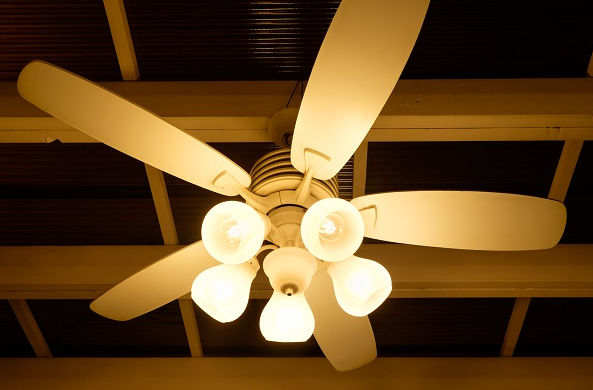
You’ve finally turned in for the night, but the air in your room feels heavy and stagnant. You reach for the remote, flip the switch, and within seconds, a gentle, rhythmic breeze washes over the bed. Your core temperature drops, the “stuffy” feeling dissipates, and you finally drift off. You aren’t just imagining that improvement—you are experiencing the direct impact of optimized bedroom airflow.
A ceiling fan in the bedroom is one of the most cost-effective upgrades for enhancing sleep quality. While some homeowners worry about noise or dust, the right fan, installed correctly, serves as a silent partner in your evening routine. This guide cuts through the debate to help you decide if a ceiling fan is the right choice for your sleeping environment.
Contents
Ceiling Fan Decision: Bedroom Quick Reference
Use this table to determine if a ceiling fan is the right fit for your specific bedroom situation.
| Situation | Recommendation | Primary Reason |
| Hot Climates | Essential | Maximizes the wind-chill effect to reduce AC load. |
| Allergy Sufferers | Caution | Requires strict, weekly blade cleaning to prevent dust agitation. |
| Bunk Beds | Avoid | Safety risk; blades must be well above the top mattress. |
| Low Ceilings | Flush Mount Only | Maintains required 7-foot safety clearance from floor. |
| Light Sleepers | DC Motor Fan | Virtually silent; eliminates electrical hum of AC motors. |
| Dry Eyes/Throat | Indirect Airflow | Direct air across the face increases evaporation; use low speed. |
1. Are Ceiling Fans Good for Bedrooms?
Ceiling fans are unequivocally good for bedrooms, provided they are sized and positioned correctly. They do not “cool” the air in the traditional sense—they move it. By creating a consistent, low-velocity breeze, they improve thermal comfort through the wind-chill effect, which helps the body dissipate heat more efficiently during the REM sleep cycle.
When the air is stagnant, the layer of humidity that builds up around your body traps heat. A ceiling fan breaks this layer. For most people, this means falling asleep faster and spending more time in deep, restorative sleep stages.
2. Benefits of Having a Ceiling Fan in the Bedroom
Better Sleep Comfort
Thermal regulation is the most critical factor in sleep quality. Studies consistently show that a slightly cooler room environment is conducive to falling asleep. A fan provides a subtle, adjustable breeze that keeps you within your “thermal comfort” zone all night long.
Lower Electricity Bills
Using a fan allows you to keep your AC thermostat set 3–4°F higher than you otherwise would. Because fans move air rather than compress refrigerant, they use a fraction of the electricity required by a central air unit.
Works Alongside AC
A ceiling fan is not a replacement for AC, but a partner. By circulating the chilled air produced by your HVAC system, the fan eliminates “hot spots” in the bedroom, ensuring the cool air actually reaches your skin rather than just cooling the walls.
Improves Airflow and Reduces Stuffiness
Stagnant air often feels heavy or “stale.” Constant, gentle circulation keeps the air composition homogeneous, preventing the buildup of CO2 and humidity that can make a room feel suffocating by 3:00 AM.
Keeps Insects Away
The gentle air current created by even a low-speed ceiling fan makes it difficult for mosquitoes and other small flying insects to navigate the room. It’s a simple, non-toxic way to reduce pests.
Space Saving
Unlike portable pedestal fans that take up valuable floor space and create tripping hazards, a ceiling fan is tucked away overhead, providing maximum coverage without sacrificing bedroom utility.
Provides Relaxing White Noise
For many, the gentle “whoosh” of air is a perfect white noise generator. It masks ambient sounds from outside or the rest of the house, helping to sustain sleep continuity.
3. Disadvantages of Bedroom Ceiling Fans
Dust Movement
Fans do not create dust, but they do move it. If blades aren’t cleaned, they harbor allergens.
- The Fix: Clean blades every two weeks with a damp microfiber cloth.
Dry Eyes and Throat
If a fan is positioned directly above the bed and run on high, it can dry out your mucous membranes.
- The Fix: Use the fan on a “Low” setting and ensure the Ceiling Fan Direction is set to a gentle downdraft.
Cold Sensation
Too much air can lead to feeling “chilled” in the early morning hours.
- The Fix: Use a fan with a wide range of speeds (a DC motor fan typically offers 6+ speeds) to avoid the “all or nothing” airflow of older models.
4. Who Should NOT Install a Ceiling Fan in the Bedroom?
- Very Low Ceilings: If your ceiling is lower than 8 feet, a fan might be unsafe or create a “chopping” airflow that feels uncomfortable.
- Severe Dry-Eye Syndrome: For those with chronic eye sensitivity, even low-velocity airflow can exacerbate irritation.
- Extremely Noise-Sensitive Sleepers: While DC fans are quiet, some people are hyper-sensitive to any mechanical sound. If you are one of them, even the quietest DC fan might be too much.
- Bunk Bed Users: If the top bunk is within 18 inches of the fan blades, the risk of injury is too high.
5. Ceiling Fan vs. Portable Fan in a Bedroom
| Feature | Ceiling Fan | Portable/Pedestal Fan |
| Cooling Power | High (Wide Coverage) | Focused (Point Cooling) |
| Noise | Lower (due to larger blades) | Higher (smaller blades spin faster) |
| Electricity | Low (Efficiency focus) | Moderate to High |
| Space | Ceiling Mount (None) | Floor Space Occupied |
| Maintenance | Low (Annual/Monthly) | Moderate (Easier to disassemble) |
6. Ceiling Fan vs. Air Conditioner in a Bedroom
An air conditioner changes the actual temperature of the air by removing heat and humidity. A ceiling fan changes the perceived temperature by accelerating sweat evaporation. The best strategy is the “hybrid model”: use the AC to bring the room temperature down to 72°F, then use the ceiling fan to maintain that comfort level while using significantly less energy.
7. What Size Ceiling Fan Is Best for a Bedroom?
Size is about matching the blade span to the square footage of the room. A fan that is too small for a large bedroom will run constantly on High, creating excess noise and wear.

| Bedroom Size | Recommended Fan Size | Typical Airflow |
| Small (< 75 sq ft) | 36″ – 42″ | 2,500 – 3,500 CFM |
| Medium (75–150 sq ft) | 44″ – 50″ | 3,500 – 5,000 CFM |
| Large (> 150 sq ft) | 52″ – 60″ | 5,000+ CFM |
Note: For more precise selection, always consult your room dimensions and check our guide on How To Measure Ceiling Fan Size.
8. Best Ceiling Fan Settings for Sleeping
In the summer, you want a gentle counterclockwise downdraft on a low-to-medium setting. In the winter, you don’t necessarily need the fan off; instead, set it to clockwise on the lowest speed to recirculate heat. The goal is to move the air, not to “blast” the room. If you notice your fan is too loud at these speeds, investigate if your Ceiling Fan Making Noise at High Speed is actually a motor issue or just an imbalance.
9. Where Should a Bedroom Ceiling Fan Be Installed?
Placement is critical. The fan should be centered over the bed for maximum airflow benefit, but never so close that it creates a “tunnel” of air. Ensure at least 10–12 inches of clearance between the ceiling and the top of the blades for efficient air intake. If the fan is too close to the ceiling, it will “choke,” resulting in poor circulation and motor overheating.
10. Are Bedroom Ceiling Fans Healthy?
Common myths suggest fans cause colds or sinus issues. This is false. Colds are caused by viruses, not moving air. However, airflow can dry out the air passages if the room is already dry.
Expert Tip: If you live in a dry climate, pair your bedroom ceiling fan with a humidifier. The combination of moist air and gentle circulation is the gold standard for respiratory comfort.
11. What Type of Ceiling Fan Is Best for Bedrooms?
DC Motor Fans (Highly Recommended)
DC motors are the quietest, most efficient, and offer the most speed settings. If you value silence above all else, spend the extra money on a DC model. For more on this, check out our comparison of AC vs DC Ceiling Fan.
Flush Mount vs. Downrod
If you have an 8-foot ceiling, use a flush mount. If you have 9-foot ceilings or higher, a downrod is essential to pull the fan out of the “stagnant air zone” at the ceiling.
Wood vs. Plastic Blades
Wood blades are often quieter because they have more mass and absorb vibrations. Plastic (ABS) blades are easier to clean and resist humidity, making them great for regions with high moisture.
12. Common Bedroom Ceiling Fan Mistakes
- Running at Max Speed: High speed is for “immediate cooling” when you enter a room, not for sustained sleeping.
- Ignoring the Wobble: A wobbling fan isn’t just annoying; it puts stress on the motor bearings and light kit.
- The “One Season” Direction: Failing to reverse the direction in winter loses you valuable heating efficiency.
- Choosing by Look Only: A beautiful fan that doesn’t move enough CFM for your room size is a useless fan.
13. Energy Saving Example
Imagine you run your AC at 70°F. If you install a ceiling fan, you can raise your AC thermostat to 74°F. Because the fan makes the air feel 4 degrees cooler, your comfort level remains the same. Since central AC consumes roughly 3,000–5,000 watts and a typical DC ceiling fan consumes only 20 watts, this shift can reduce your total cooling electricity consumption by as much as 15–20% on hot nights.
To see how your specific fan compares, check out our guide on Average Ceiling Fan Wattage.
14. Simple Maintenance Tips
- Dusting: Use a pillowcase to trap dust on the blades so it doesn’t fall on your bed.
- Tightening: Every six months, check the screws on the blade irons.
- Checking the Wobble: If you notice a shake, use a balancing kit—it’s usually just a clip that needs to be moved.
- When to Replace: If your fan hums, emits a smell, or refuses to start without a push, check your capacitor status before deciding to replace the whole unit.
Frequently Asked Questions
1. Is it safe to leave a ceiling fan on all night?
Yes, modern fans are designed for continuous duty. As long as the fan is properly maintained, it is perfectly safe to run all night.
2. Does a ceiling fan cool the room temperature?
No, it cools the person. The fan moves air, which helps your body sweat evaporate; it does not change the ambient temperature of the room.
3. Will a ceiling fan keep me from getting a cold?
Fans do not cause colds; viruses do. However, running a fan in a dry room can dry out your throat, which might make you feel like you have a cold.
4. Can I use a fan in a bedroom with a bunk bed?
Only if the blades are at least 18–24 inches above the top mattress. Safety is paramount.
5. Are DC fans worth the extra cost?
For a bedroom, yes. The silence and the fine-tuned speed control are worth the investment for light sleepers.
6. How often should I clean my bedroom fan?
Monthly is ideal for allergy sufferers. Every 3 months is sufficient for everyone else.
7. Does the number of blades matter for sleep?
Generally, more blades move air more smoothly at slower speeds, which creates less noise. See Does the Number of Blades on a Ceiling Fan Matter for a deep dive.
8. Is a light kit necessary for a bedroom fan?
That depends on your other lighting. If the fan is your only light source, choose a model with an integrated, dimmable LED kit.
9. Why is my fan clicking at night?
Clicking is usually a loose screw or an issue with the blade-to-iron connection. It is rarely the motor itself.
10. How do I know if my ceiling fan is the right size?
Use the sizing table in this article to match CFM and diameter to your room’s square footage.
11. Can I use a smart fan in a bedroom?
Yes, smart fans allow you to set “sleep timers,” which are fantastic for turning the fan off after you’ve already fallen asleep.
12. Is it bad to have a fan directly over my bed?
Not at all. It is the most effective placement for cooling, provided you aren’t using a high-speed “blast” setting.
13. Do fans help with allergies?
Only if the blades are kept clean. If they are dusty, they will circulate allergens every time they turn on.
14. What is the quietest ceiling fan setting?
Usually the lowest speed setting on a DC motor fan.
15. Should I leave the fan on if I’m not in the room?
No. Fans cool people, not empty rooms. Turn it off to save energy and wear and tear.
Final Verdict
Installing a ceiling fan in your bedroom is one of the most effective ways to improve your nightly recovery. If you are a light sleeper, prioritize a DC motor fan for its silent operation. If you struggle with humidity or heat, look for a model that meets the CFM requirements for your square footage.
As long as you commit to keeping the blades clean and ensuring the installation is balanced, a bedroom ceiling fan will provide years of comfort, significantly reducing your reliance on expensive AC cooling. The key is balance: match the size to the room, the speed to your comfort, and the direction to the season.


