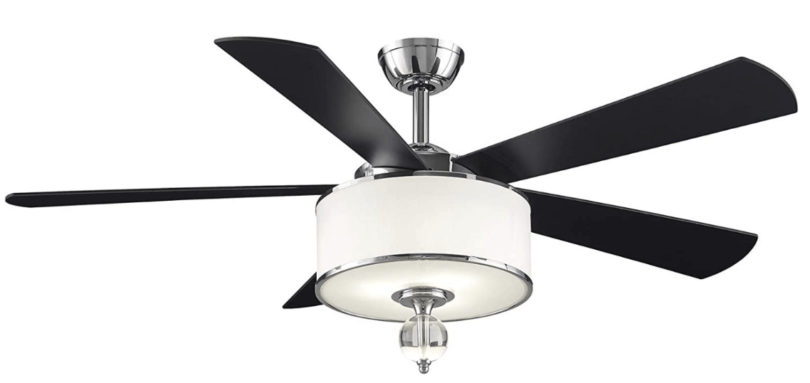
Ceiling fans are widely recognized as one of the most cost-effective appliances for maintaining airflow and comfort in American homes. When households look to manage their utility bills, the financial impact of running a fan continuously is often the first question asked. Unlike high-draw cooling systems, a ceiling fan operates on a fraction of the energy, making it an ideal choice for budget-conscious residents.
With electricity prices fluctuating year to year, understanding realistic, current operating costs is more important than ever. While many appliances can cause noticeable spikes in monthly bills, the cost to run a ceiling fan 24/7 remains remarkably low. Below is a clear, data‑driven breakdown based on the most recent U.S. national average electricity rate (≈ $0.18 per kWh).
Contents
Cost to Run a Ceiling Fan 24/7
Running a standard ceiling fan 24/7 in the U.S. typically costs between $0.06 and $0.32 per day, or $2 to $10 per month, depending on wattage and speed settings. These estimates assume fans ranging from 15 to 75 watts, which covers most modern residential ceiling fans.
Hourly Running Cost
The hourly cost of operating a ceiling fan is measured in fractions of a cent:
- 25W fan: ≈ $0.0045 per hour
- 50W fan: ≈ $0.0090 per hour
- 75W fan: ≈ $0.0135 per hour
Because of these micro‑costs, ceiling fans are widely considered one of the most economical comfort appliances in a home.
For a detailed wattage explanation, see How Much Electricity Does a Ceiling Fan Use?
When you break down these numbers based on the latest data from the U.S. Energy Information Administration (EIA), it becomes clear that the “per hour” expense is negligible for most households. This allows residents to leave fans running in occupied rooms without the financial anxiety associated with larger appliances.
Daily Cost (24 Hours)
| Fan Wattage | Daily Cost |
| 15W | ~$0.06 |
| 30W | ~$0.13 |
| 55W | ~$0.23 |
| 75W | ~$0.32 |
Even at higher speeds, the daily cost rarely exceeds the price of a postage stamp.
Most American households utilize fans in the 50W to 75W range. This daily cost remains stable regardless of the outside temperature, provided the speed setting remains constant.
Monthly Cost of Continuous Use
| Fan Wattage | Monthly Cost |
| 20W (DC motor) | ~$2.60 |
| 40W | ~$5.20 |
| 60W | ~$7.80 |
| 75W | ~$9.75 |
Most U.S. households operate fans in the 50–75W range, keeping monthly costs comfortably under $10.
Yearly Cost of Running a Fan 24/7
Over a full year of uninterrupted operation:
- 30W fan: ~$47 per year
- 60W fan: ~$95 per year
- High‑efficiency DC fan: ~$30–$40 per year
Compared with other cooling options, this annual expense is extremely low.
Related reading: Pros and Cons of Ceiling Fans
Ceiling Fan Running Cost Table (USD, GBP, AUD)
The cost to operate a fan varies significantly by region due to local energy price caps and market volatility. In 2025, residents in the UK and Australia face different pricing structures compared to those in the U.S., largely driven by different national energy policies and supply costs.
The following table provides a comprehensive financial comparison for three major currencies. These calculations assume continuous 24/7 operation for 30 days.
| Fan Power Level | Avg. Watts | Monthly Cost (USD) | Monthly Cost (GBP) | Monthly Cost (AUD) |
| Low-Powered (DC) | 20W | $2.60 | £3.99 | $4.68 |
| Medium-Powered | 55W | $7.15 | £10.97 | $12.87 |
| High-Powered | 90W | $11.71 | £17.94 | $21.06 |
Disclaimer: Rates used for calculations are averages for 2025: U.S. ($0.1807/kWh), UK (£0.2769/kWh per Ofgem), and Australia ($0.325/kWh per Energy.gov.au).
Understanding the Regional Differences
In the United Kingdom, the 2025 energy price cap has a direct impact on the monthly cost of running appliances. Because the UK rate per kWh is higher than the U.S. national average, British households will see a higher “per fan” cost on their bills. For example, a high-powered fan in London costs nearly double the amount of a similar fan in a low-rate U.S. state like Idaho.
Australia presents a unique scenario where rates can fluctuate wildly between states like South Australia and Victoria. The average cost of $0.325/kWh used in the table reflects a middle-ground estimate. Residents in Sydney or Melbourne should check their specific retail plans, as many providers offer “time-of-use” pricing that could lower the cost of running a fan during off-peak overnight hours.
Regardless of the currency, the data consistently shows that even at high-powered settings, the cost remains a minor household expense. This global affordability makes the ceiling fan the primary cooling choice for billions of people worldwide.
What Influences the Cost of Running a Fan 24/7
The financial cost of continuous operation is primarily dictated by three hardware and usage factors: speed, motor technology, and integrated features. While the base cost is low, small adjustments in how you use the fan can lead to noticeable differences in your annual utility spending.
Speed Settings
The speed at which you run your fan has a non-linear impact on electricity costs. Most fans consume significantly more power on “High” than they do on “Low.” For instance, a fan running on its lowest setting might use only 15 watts, whereas the same fan on its highest setting could jump to 75 watts.
In financial terms, this means running a fan 24/7 on “High” costs five times more than running it on “Low.” For a homeowner, this is the difference between paying $1.95 per month and $9.75 per month. Choosing the medium setting is often the best compromise for balancing airflow with cost efficiency.
Motor Type (AC vs DC)
The most significant factor in long-term cost is the type of motor inside the fan housing. Traditional AC (Alternating Current) motors are less expensive to purchase but less efficient to run. Modern DC (Direct Current) motors are the high-efficiency alternative, often using 60% to 70% less electricity to move the same amount of air.
A DC motor fan running 24/7 will typically cost between $2 and $4 per month. An older AC motor fan running 24/7 can easily cost $8 to $12 per month. Over the course of five years, the savings from a DC motor fan can often pay for the price of the fan itself, making it the superior financial choice for those who prefer continuous operation.
Built-in Lights
Integrated lighting kits are a common addition to ceiling fans, but they can drastically change the cost profile if left on 24/7 alongside the blades. If you use traditional incandescent bulbs, the lighting could actually cost more to run than the fan motor itself.
Switching to LED bulbs is the most effective way to keep lighting costs down. An LED bulb typically adds only a few cents to the daily cost, whereas older bulbs can double or triple the expense. To maintain the lowest possible cost, many homeowners choose to operate the fan 24/7 while only turning the light on when the room is occupied.
Ceiling Fan vs Air Conditioner – Cost Comparison
| Appliance | Daily Cost (24/7) | Monthly Cost |
| Ceiling Fan (60W) | ~$0.26 | ~$7.80 |
| Window AC (1,200W) | ~$5.20 | ~$156 |
| Central AC (3,500W) | ~$15.18 | ~$455 |
A ceiling fan can cost 50–60 times less to operate than central air conditioning.
Conclusion
Running a ceiling fan 24/7 is one of the most affordable ways to manage home comfort in 2025. With daily costs ranging from $0.06 to $0.43 and monthly totals staying well under $15 for most households, the financial burden is minimal. This makes it an outlier in the world of home appliances, where most climate control options carry a significant price tag.
Whether you are using a high-efficiency DC motor fan or a standard AC model, the key to the lowest possible bill is selecting the right speed setting and utilizing modern LED lighting. By understanding these costs, you can confidently keep your home ventilated throughout without the fear of a skyrocketing utility bill.


