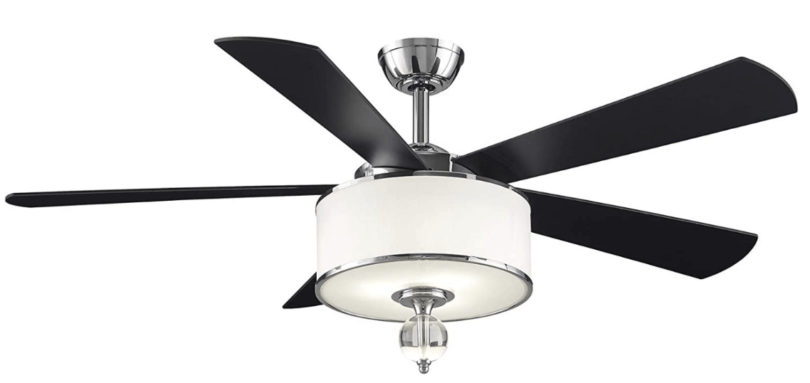
Yes, it is generally safe to leave a ceiling fan on 24/7. Most modern fans are engineered for “continuous duty,” meaning their motors can run indefinitely without overheating. While this practice is safe and common, energy efficiency and motor wear are factors to consider for long-term use today.
In this guide, we will explore the engineering behind continuous fan operation, long-term efficiency considerations, and when constant use does or does not make practical sense.
Contents
Are Ceiling Fans Designed to Run Continuously?
Key takeaway: Ceiling fans use heavy-duty motors designed for long-duration operation, unlike smaller portable fans which may use lighter components not intended for 24/7 use.
The motors inside ceiling fans are built to a higher standard than most household appliances. Whether your fan uses a traditional AC motor or a high-efficiency DC motor, it is designed to reach a stable operating temperature and stay there. Manufacturers anticipate that these units will be left on for days or even weeks at a time during peak summer months.
While AC motors have been the reliable standard for decades, modern ceiling fans show that DC versions are even better suited for continuous use. This is because DC motors generate less friction and heat, allowing them to run cooler even when operated 24 hours a day, 7 days a week.
Electrical Safety: Is There a Fire Risk?
Key takeaway: While any electrical appliance has a theoretical risk, ceiling fans are among the safest to run continuously due to their low-wattage design and built-in thermal safeguards that prevent overheating.
Homeowners often worry that a motor running for days will eventually overheat and ignite. However, ceiling fans are engineered with enclosed housings that prevent dust—the primary fuel for electrical fires—from reaching the electrical contacts of the motor. Modern units produced today also include thermal overload protection, which is a fail-safe that cuts power if the internal temperature exceeds a safe threshold.
- Thermal Protection: Acts like a localized circuit breaker inside the motor to prevent heat spikes.
- Enclosed Motors: Prevents external contaminants and household dust from interfering with internal wiring.
- Low Amperage: Fans draw very little current, meaning they don’t strain household circuits like space heaters do.
Safety concerns typically only arise if the fan is poorly maintained or installed on outdated wiring. Under normal operating conditions, the risk is minimal. For a complete breakdown of specific warning signs and technical risks, see our specialized guide on whether Are Ceiling Fans Dangerous or Safe?
Energy Cost of Running a Ceiling Fan 24/7
One of the biggest concerns for homeowners is the impact on their utility bill. Because fans use a fraction of the power of an air conditioner, the cost of continuous operation is remarkably low. A typical fan uses between 15 and 75 watts, depending on its speed and motor type.
| Fan Type | Average Wattage | Estimated Monthly Cost (24/7) |
| DC Motor Fan | 15W – 30W | $2.00 – $4.00 |
| AC Motor Fan | 50W – 75W | $6.50 – $10.00 |
When you consider How Much Does It Cost to Run a Ceiling Fan 24/7?, you will find that even the most powerful ceiling fan costs significantly less than a single day of running a central air conditioning unit. This makes the fan an ideal tool for maintaining airflow without the “financial anxiety” of high-draw appliances.
Does Running a Fan 24/7 Reduce Its Lifespan?
While all mechanical devices experience wear, ceiling fans are surprisingly resilient. Interestingly, starting and stopping a fan frequently can sometimes cause more stress on the motor and capacitor than leaving it running at a constant speed. This is because the “inrush current” required to start the motor generates a brief spike in heat.
The primary wear points are the ball bearings. In a high-quality fan, these bearings are permanently lubricated and sealed. Running the fan 24/7 will eventually lead to bearing wear over a period of 10 to 15 years, but this is a normal lifecycle for a frequently used appliance. Today, modern motor efficiency ensures that constant use is a viable long-term strategy.
Situations Where Turning It Off Makes Sense
Even though it is safe to leave the fan on, it isn’t always practical. According to the U.S. Department of Energy, fans cool people, not rooms. They work via the “wind chill effect,” evaporating moisture from your skin to make you feel cooler.
You should consider turning the fan off in the following scenarios:
- Empty Rooms: If no one is there to feel the breeze, the fan is simply moving air and wasting a small amount of electricity.
- Mild Weather: During cool evenings, natural ventilation from an open window is often more effective.
- Noise Sensitivity: Even the quietest fans produce some ambient noise, which may be undesirable during quiet hours.
Practical Tips for Safe 24/7 Operation
If you choose to keep your fans running currently, a few maintenance habits will ensure the system remains safe and efficient. Dust is the primary enemy of an unattended fan, as it can throw the blades out of balance or clog motor vents.
- Clean Dust Periodically: Wipe the blades every few months to prevent motor strain.
- Check Mounting: Ensure the canopy screws are tight once a year.
- Use Medium Speeds: Running on medium rather than high speeds reduces the load on the motor bearings significantly while still providing excellent airflow.
- Smart Switches: Consider using a smart switch or timer to automatically turn the fan off when you leave for work, saving energy without compromising comfort.
Conclusion
Running a ceiling fan 24/7 is a safe and affordable way to maintain a comfortable home environment. Because these fans are built with industrial-grade standards and thermal safety features, you can rest easy knowing that continuous operation is within the manufacturer’s intended use.
While it is safe, remember the golden rule of efficiency: fans are for people. Turning them off when a room is unoccupied is the best way to balance comfort with responsible energy use today. By keeping your fan clean and properly maintained, you can enjoy constant airflow for many years to come.


